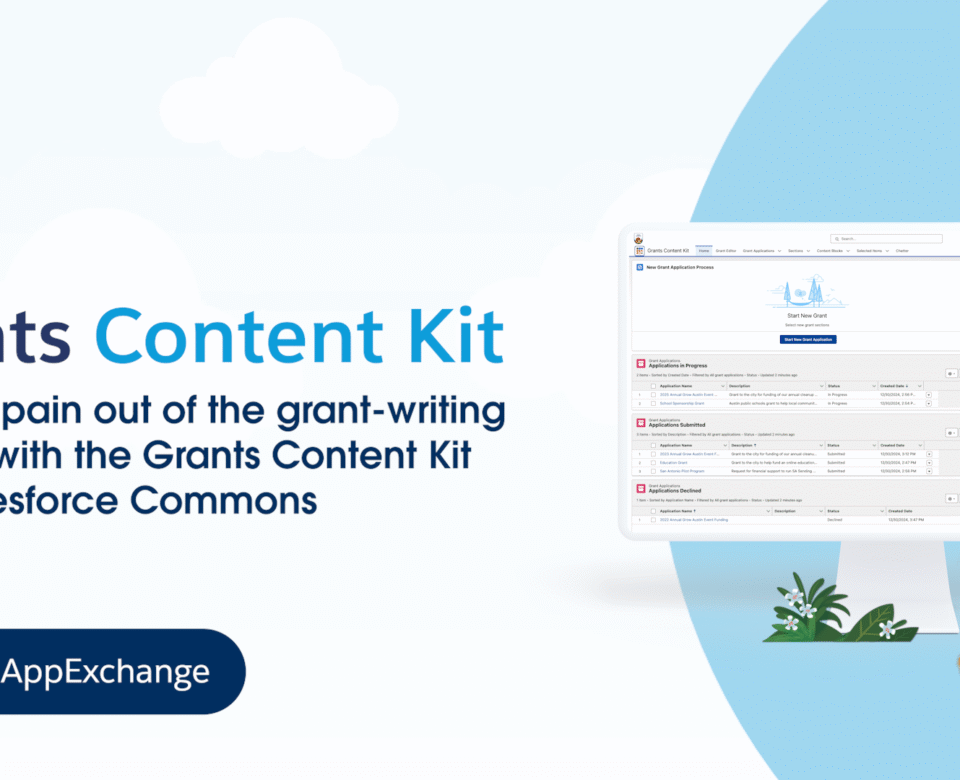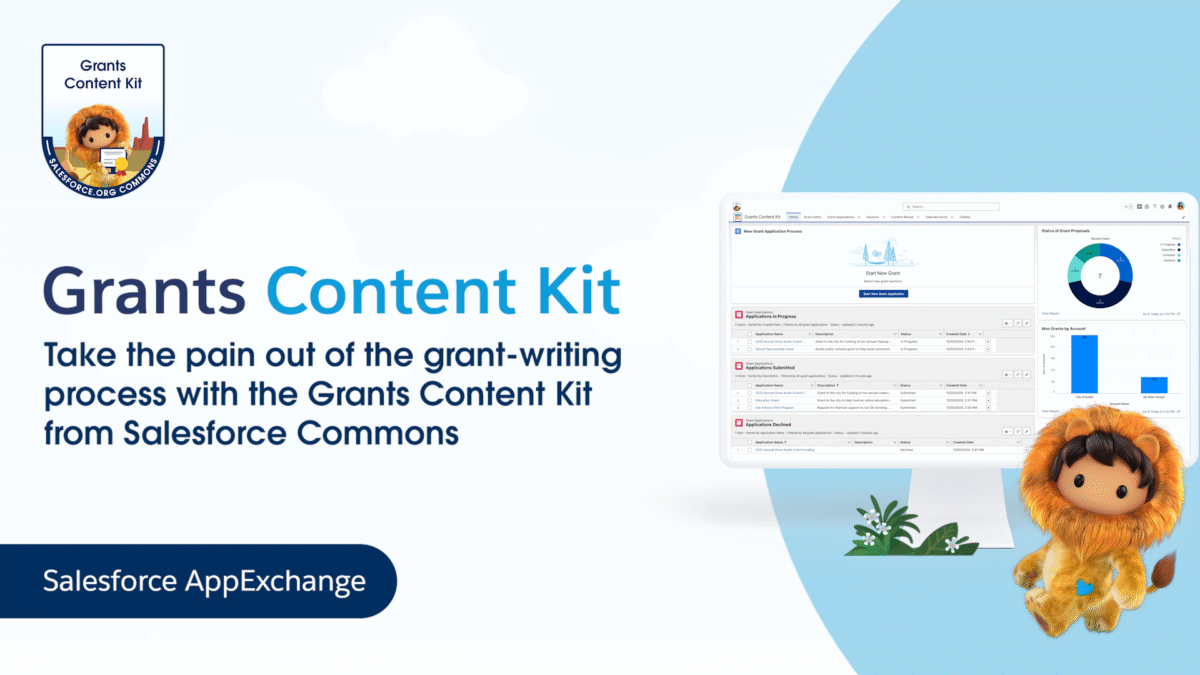
Grants Content Kit
🚀 The Digital Transformation Journey: Scaling Social Enterprise Innovation with Salesforce Nonprofit Cloud
Vestibulum vehicula tempor nulla, sed hendrerit urna interdum in. Donec et nibh maximus, congue est eu, mattis nunc. Praesent ut quam quis quam venenatis fringilla. Morbi vestibulum id tellus commodo mattis. Aliquam erat volutpat. Aenean accumsan id mi nec semper.
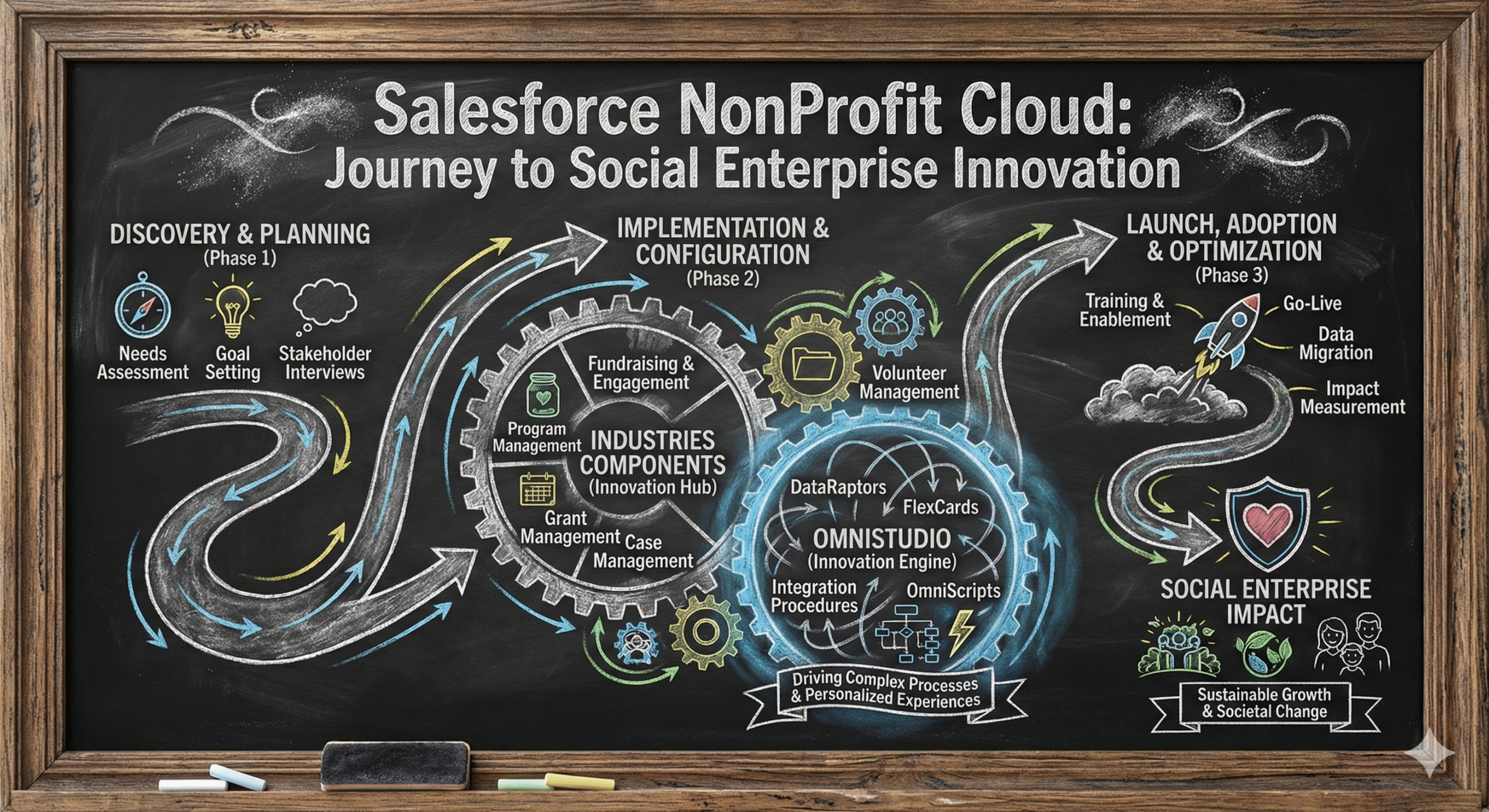
In the dynamic landscape of social enterprise and nonprofit organisations, the path to sustained impact is increasingly paved with digital innovation. The infographic you've provided offers a compelling visual roadmap, illustrating a holistic approach to technological adoption centred around Salesforce Nonprofit Cloud. This journey is not merely about implementing a new software system; it is a strategic migration designed to transform operational efficiency, deepen stakeholder engagement, and ultimately, amplify mission-driven impact.
This article will delve into the critical phases, architectural components, and strategic enablers outlined in the roadmap, constructing a comprehensive narrative of the modern nonprofit's evolution into a truly data-driven social enterprise.
Phase I: The Foundational Blueprint—Setting the Stage for Transformation
The journey begins with a meticulous Preparation and Planning phase, the bedrock upon which the entire digital transformation is built. This initial stage emphasises the crucial need for organisational alignment, ensuring all stakeholders—from executive leadership to frontline staff—understand and champion the move to a unified platform.
A cornerstone of this phase is the Migration strategy. For organisations transitioning from older systems, such as the Nonprofit Success Pack (NPSP), this involves not just moving data but also, critically, cleaning, normalising, and mapping existing program, donor, and case data into the new, unified data model of Nonprofit Cloud. This rigorous process is essential to establishing a single source of truth across the organisation, eliminating data silos that hinder collaborative effort and accurate reporting.
This foundation is further solidified by the Architecture and Configuration step, where the core system is customised. Unlike a one-size-fits-all CRM, Nonprofit Cloud is purpose-built, allowing for bespoke configuration of its key components, such as:
- Fundraising: Setting up donation tracking, grant management, and major donor portfolios.
- Program Management: Configuring program delivery, service setup, and participant enrollment.
- Outcome Management: Defining and tracking Key Performance Indicators (KPIs) to measure mission success.
Careful work in this phase ensures the system fits the nonprofit’s unique needs. This is necessary before adding further innovation.
Phase II: The Core Enablers—Building Seamless, Intelligent Experiences
The second phase of the journey introduces the strategic tools and components that enable the organisation to build fluid, user-centric experiences, both internally and externally.
The Power of the OmniStudio Toolkit
A significant enabler in the modern Salesforce ecosystem is OmniStudio, which is explicitly highlighted as a key component in building guided, custom experiences. OmniStudio is a declarative (low-code/no-code) suite of tools that allows non-developers to create complex, multi-step business processes with ease. For a social enterprise, this translates into:
- Guided Grant Applications: Building easy-to-follow, online forms for those applying for grants that check for completed steps, guide users, and make sure all needed information is included.
- Service Delivery Workflows: Setting up simple digital steps for program participants, making it easy for staff to follow what needs to happen next when providing help or resources.
- Real-Time Data Display (FlexCards): Creating personalised, visually rich interfaces that display consolidated constituent, case, or donor data on a single screen, empowering staff with an "at-a-glance" view of their mission-critical relationships.
OmniStudio changes burdensome, manual tasks into digital workflows. This reduces paperwork and significantly improves service quality.
Integration and Automation for Scale
Integration Procedures and DataRaptors play a vital role in the roadmap. These tools connect Nonprofit Cloud to external systems, including accounting systems, payment processors, and program databases.
- One feature, called DataRaptors, helps read, save, and modify data in Salesforce.
- Integration Procedures are sets of steps that bring together data actions and connect with other computer systems online.
This seamless, automated data flow is the difference between a system that serves as a mere repository and one that acts as a fully integrated, intelligent operational platform. The emphasis on API-driven architecture signifies a commitment to a future-proof system that can easily connect with new technologies and partners as the organisation scales its impact.